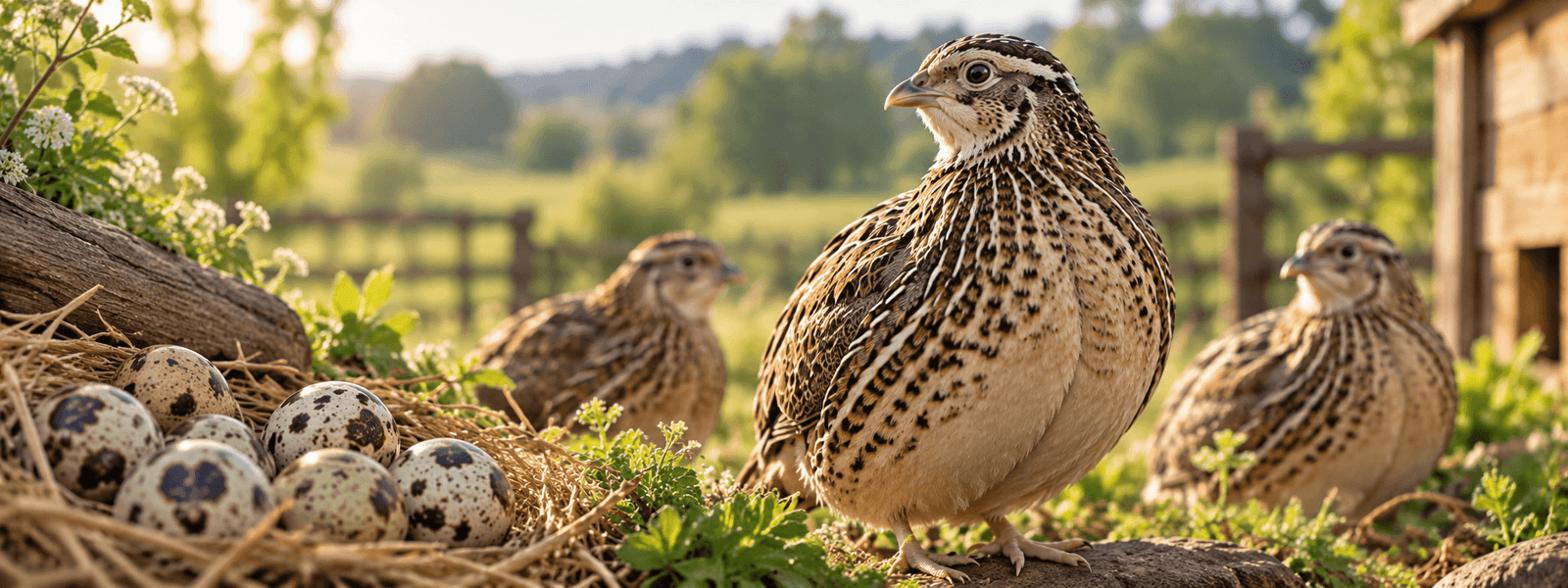
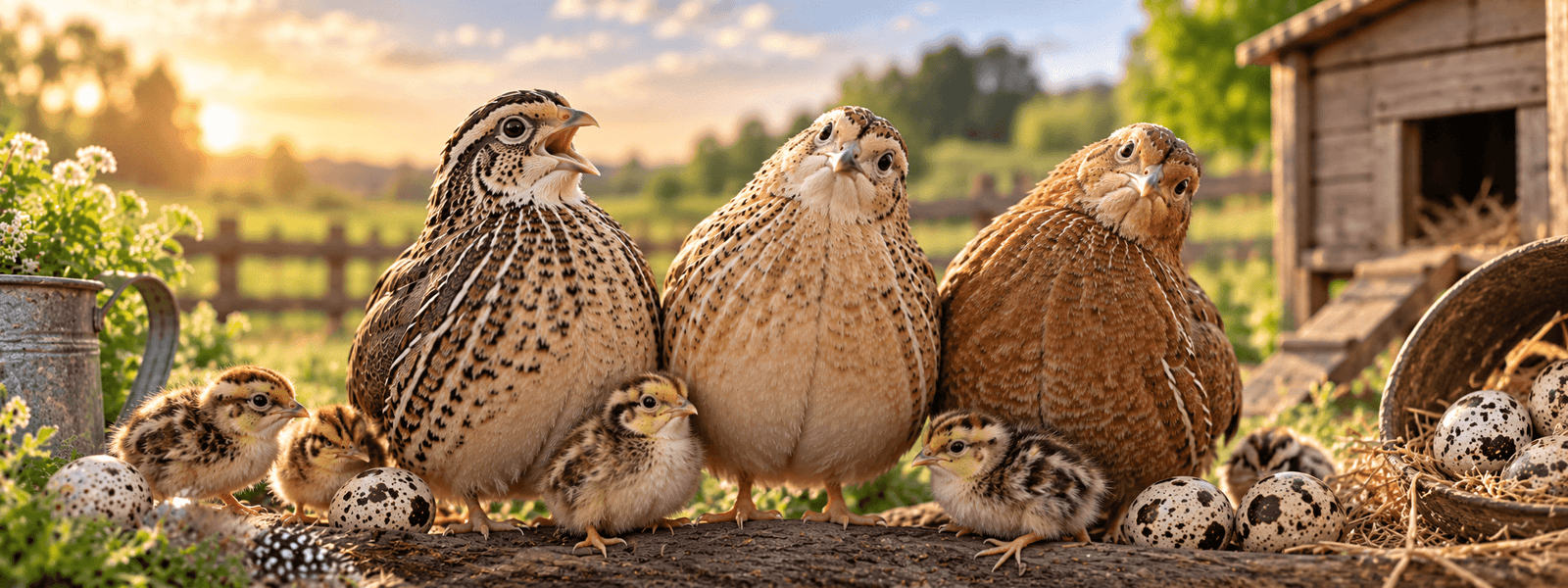
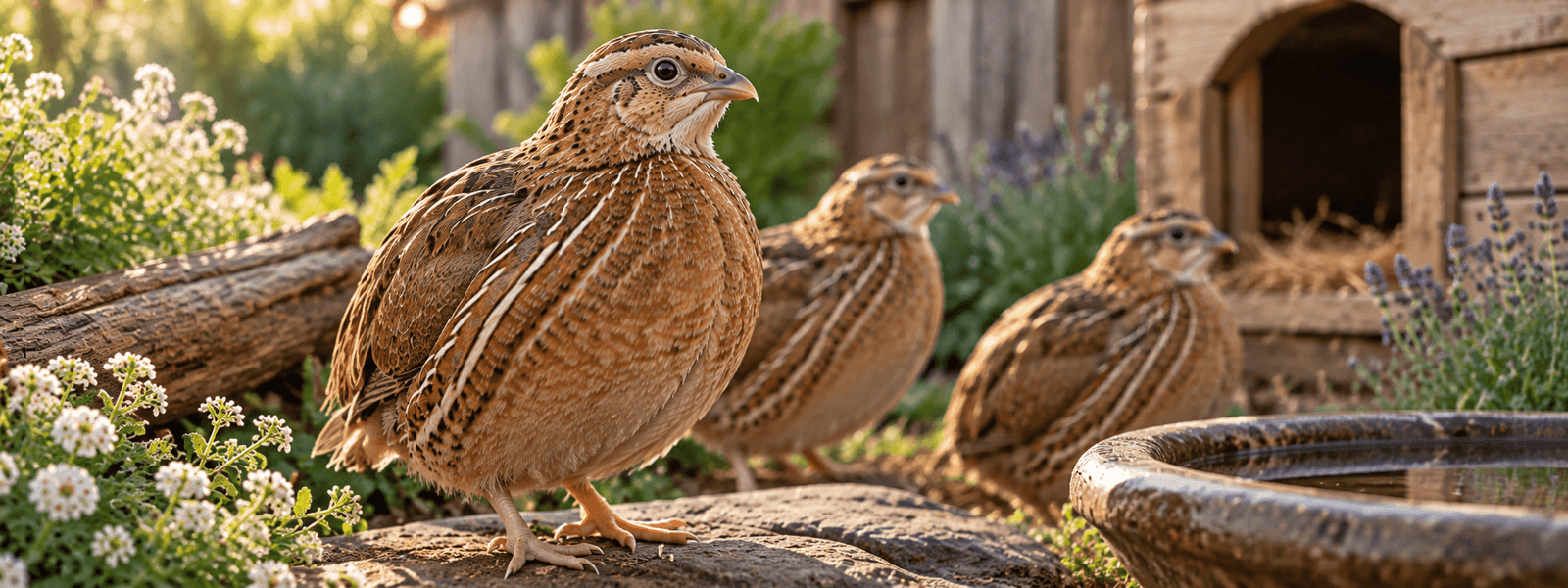
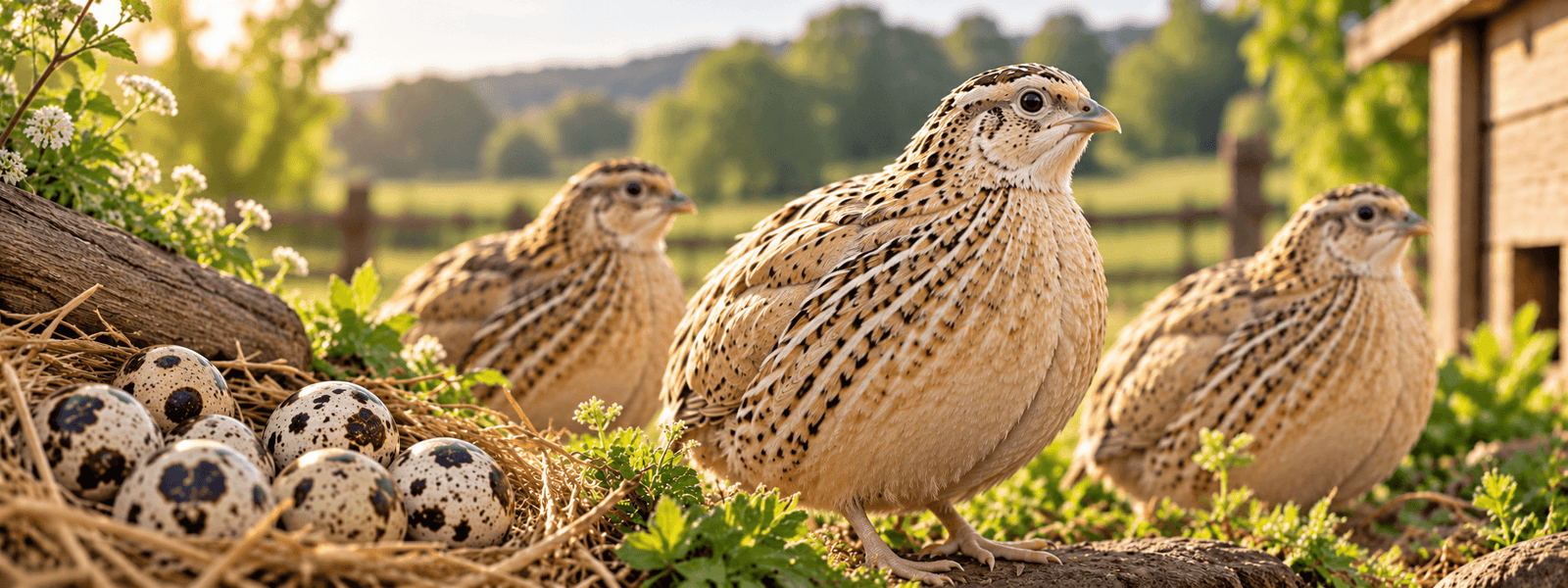
Japanese Coturnix quail, often described by keepers as Wild Type or Pharaoh, are the classic brown patterned Coturnix and a brilliant choice for anyone starting with quail. They are small, active and productive birds with beautiful natural colouring and the familiar speckled eggs that make Coturnix quail so distinctive.
Variety Type | Japanese Coturnix (Wild Type / Pharaoh colouring) |
Temperament | Active, alert and social; generally straightforward to manage in a settled group |
Egg Colour | Cream to pale tan with distinctive brown or dark speckling |
Egg Production | Productive layers; commonly around 250 to 300 eggs per year under good conditions |
Size | Small, compact game bird; females are usually larger than males |
Appearance | Natural mottled brown, cream and buff plumage with strong wild type patterning |
Hardiness | Generally hardy when kept dry, sheltered and protected from predators and draughts |

The Japanese Coturnix is the domesticated quail most commonly kept for eggs and breeding. Wild Type birds retain the natural brown and cream pattern associated with Coturnix japonica, giving them excellent camouflage and a very traditional quail appearance.
They mature quickly and females can begin laying from around six to eight weeks old when conditions, nutrition and day length are suitable. Their rapid development and short incubation period make them particularly rewarding for people interested in keeping, breeding or hatching quail.
Wild Type Coturnix have the classic mottled quail appearance. As the birds feather up, males and females can often be distinguished by their breast plumage: males tend to develop a more even rusty chest, while females usually retain darker spotting. Individual lines can vary, so sexing should always be confirmed carefully.
For new quail keepers, Japanese Wild Type Coturnix are a sensible place to begin. They are productive, widely understood by breeders and give keepers a useful reference point for learning Coturnix behaviour, feather sexing and breeding.
Each hen lays naturally patterned eggs, with the amount and shape of speckling varying from bird to bird. Once you know your flock well, you may even start recognising which hen laid a particular egg.
Let’s Help You Get Started