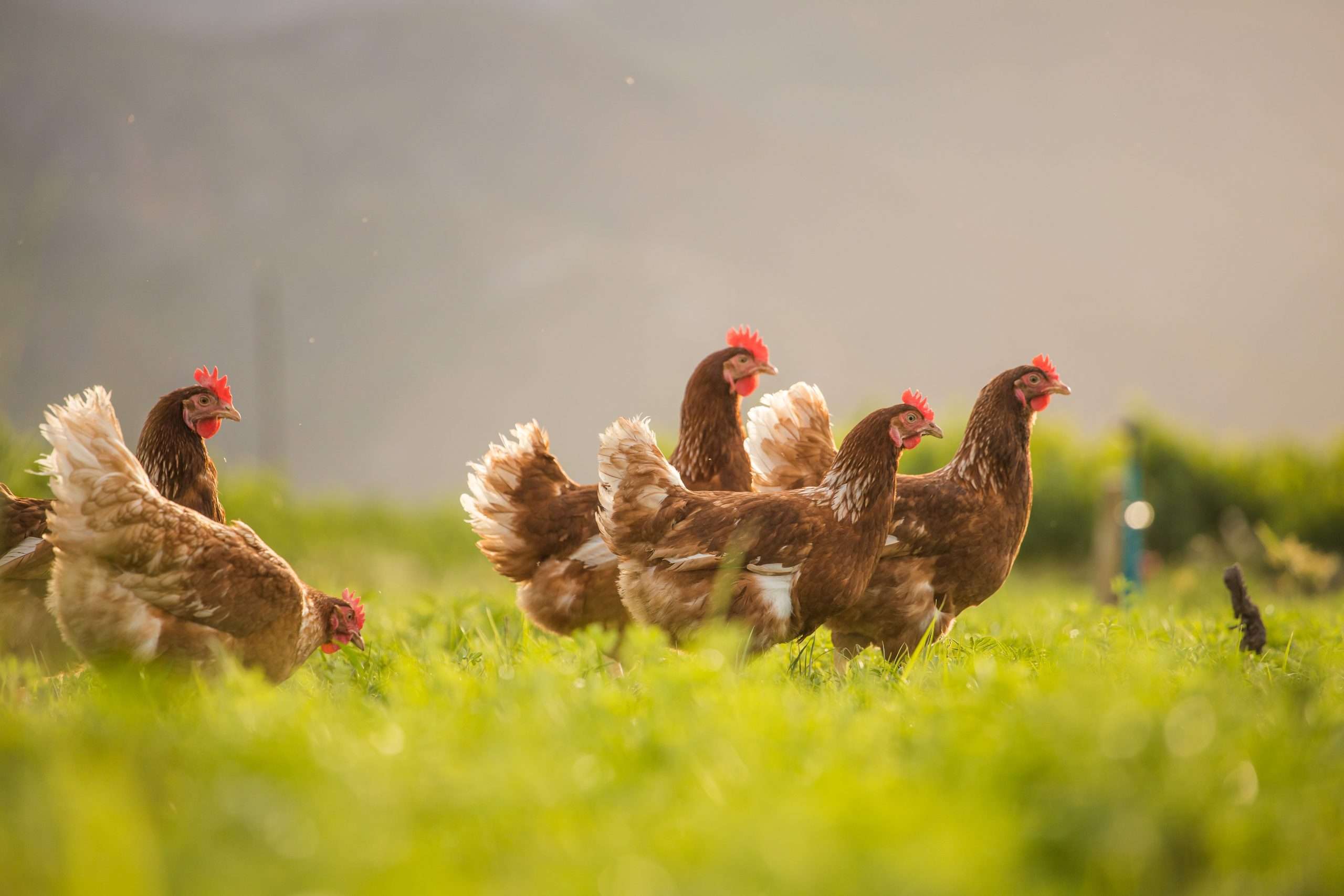
Understanding the anatomy of a chicken helps poultry keepers recognise signs of good health, identify potential problems early, and care for their birds more effectively.
Chickens are remarkable animals with specialised digestive systems, lightweight skeletons, and a reproductive system capable of producing eggs almost daily. Whether you keep chickens for eggs, breeding, or simply as pets, learning how their bodies work can greatly improve the welfare of your flock.
This guide explains the external body parts, internal organs, and skeletal structure of a chicken, helping you better understand how your birds function.
A chicken’s external body parts serve important functions such as protection, temperature regulation, movement, and communication.
Comb
The comb is the fleshy red crest on top of a chicken’s head. It helps regulate body temperature by releasing heat through the blood vessels inside it.
Healthy chickens typically have bright red combs, although colour may vary slightly depending on breed and age.
Wattle
Wattles hang below the beak and serve a similar function to the comb, helping regulate body temperature.
Beak
A chicken’s beak is used for:
Unlike mammals, chickens do not have teeth. Food is swallowed whole and processed later in the digestive system.
Eye
Chickens have excellent eyesight and can detect movement extremely well. Their vision also allows them to see a wider range of colours than humans.
Ear Lobe
Located behind the eye, the ear lobe covers the ear opening. In many breeds, ear lobe colour can give clues about egg colour:
(This is not always accurate for every breed.)
Hackle Feathers
Hackle feathers are the feathers around the neck. In roosters these are often longer and more pointed.
Breast
The breast contains the large pectoral muscles that power the wings.
Wings
Wings help chickens balance, jump onto perches, and escape danger. Although most domestic chickens do not fly long distances, they can often fly short distances or glide.
Saddle
The saddle is the area between the back and tail.
Tail Feathers
Tail feathers help with balance and communication. Roosters often have long curved tail feathers called sickle feathers.
Legs and Feet
A chicken’s legs contain several key parts:
Scratching behaviour is a natural instinct used to find insects, seeds, and other food.
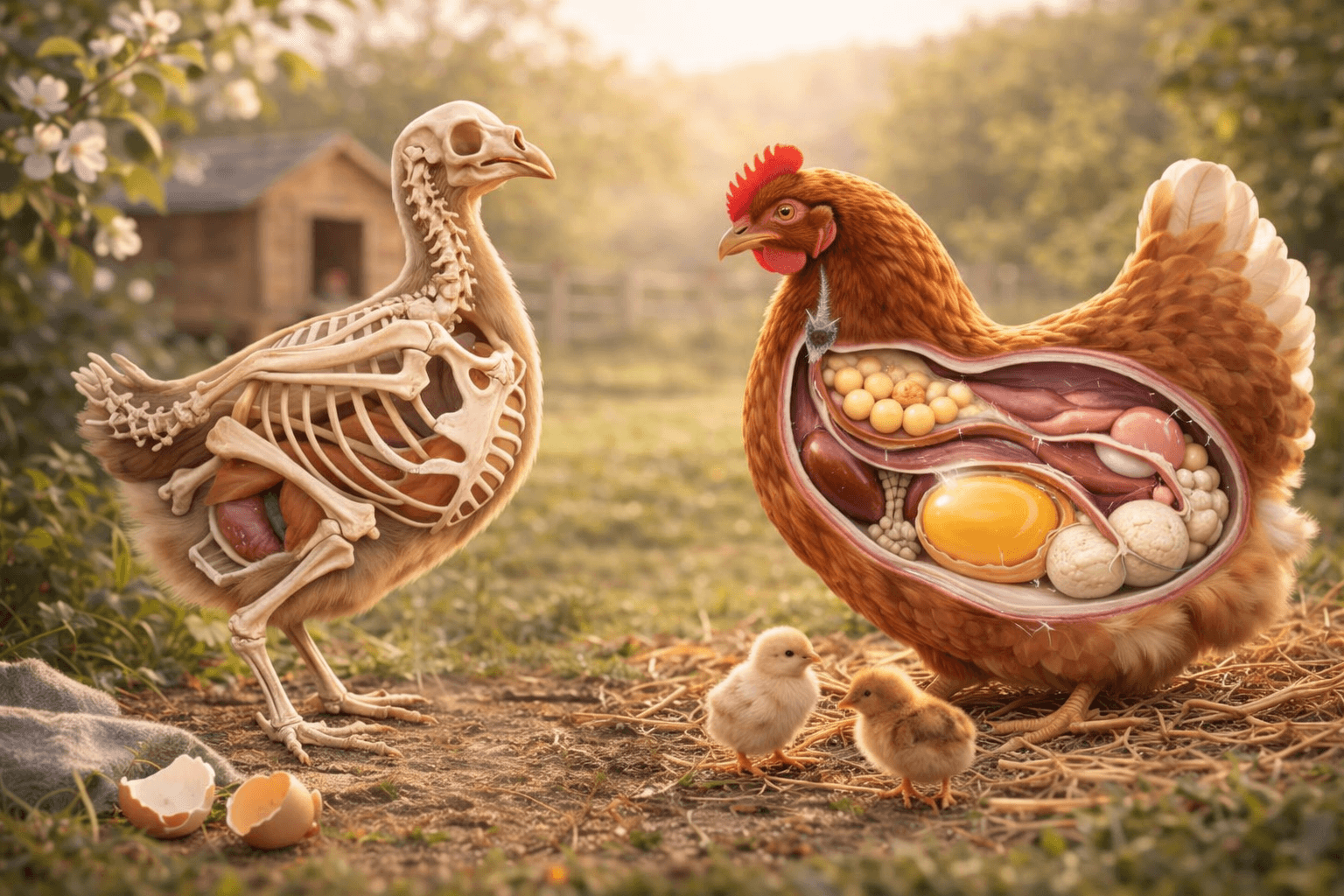
Chickens have a specialised digestive system designed to process whole grains, seeds, insects, and plant material.
Beak and Mouth
Food enters through the beak and travels down the oesophagus.
Crop
The crop is a storage pouch located in the neck. It temporarily stores food before digestion begins.
This allows chickens to eat quickly and digest food gradually.
Proventriculus
The proventriculus is often called the glandular stomach. Here digestive enzymes and acids begin breaking down food.
Gizzard
The gizzard is a muscular organ that grinds food into smaller particles.
Chickens swallow small stones or grit which help the gizzard grind food effectively.
Small Intestine
The small intestine absorbs nutrients from digested food.
Important digestive secretions enter here from:
Caeca
Chickens have two caeca, which help digest fibre and absorb nutrients.
Large Intestine
Water is absorbed here before waste is expelled.
Cloaca
The cloaca is the common exit point for:
A hen’s reproductive system is highly specialised for egg production.
Ovary
The ovary contains thousands of tiny ova (egg yolks) at different stages of development.
When a yolk matures, it is released into the oviduct.
Oviduct
The oviduct is where the egg forms. It consists of several sections.
Infundibulum
This funnel-shaped section captures the yolk after ovulation.
If fertilisation occurs, it happens here.
Magnum
The egg white (albumen) forms around the yolk in this section.
Isthmus
The shell membranes develop here.
Uterus (Shell Gland)
The eggshell is formed in this section. Calcium is deposited to create the hard shell.
Vagina
The egg passes through the vagina before being laid.
The entire egg formation process usually takes 24 to 26 hours.
A chicken’s skeleton is lightweight but strong, allowing efficient movement and support.
Skull
The skull protects the brain and supports the beak.
Cervical Vertebrae
Chickens have many neck vertebrae, allowing them to move their heads very flexibly.
Wishbone (Clavicle)
Also called the furcula, this bone helps support the wings.
Sternum (Keel Bone)
The sternum contains a large keel where flight muscles attach.
Wing Bones
Wing bones include:
Leg Bones
Key leg bones include:
These bones allow chickens to walk, run, scratch, and perch.
Pygostyle
This bone supports the tail feathers.
Learning chicken anatomy helps poultry keepers:
Observing your chickens regularly will help you learn what is normal for your birds and spot changes quickly.
Disclaimer Section (Important)
The information on this page is intended for educational purposes. While every effort has been made to ensure accuracy, it should not replace advice from a qualified poultry veterinarian. If you are concerned about the health of your chickens, always consult a professional.