
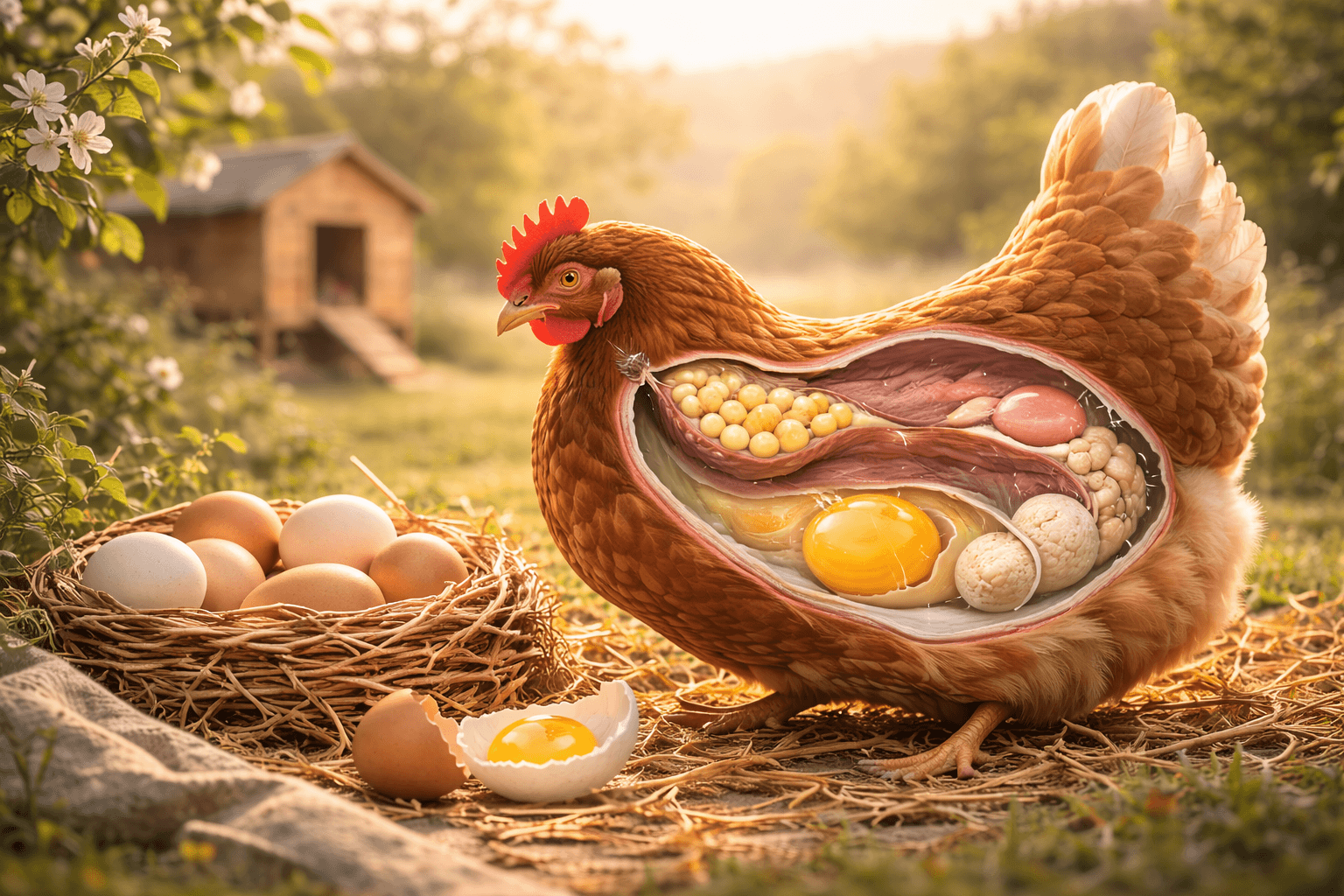
Egg production is one of the most fascinating biological processes in the animal world. A laying hen can produce an egg almost every day, and the entire process takes place inside a specialised reproductive system designed specifically for egg formation.
Understanding how eggs are formed helps poultry keepers better care for their hens, recognise normal egg production patterns, and identify potential health issues.
This guide explains the step-by-step process of egg formation, from the development of the yolk to the laying of the finished egg.
Unlike most animals, hens typically have only one functional ovary and oviduct, located on the left side of their body.
This system consists of:
Egg formation begins in the ovary.
The ovary contains thousands of tiny ova (future yolks). These develop into the yellow yolks found inside eggs.
When a yolk matures, it is released from the ovary in a process called ovulation.
Key facts:
The yolk then enters the next stage of the reproductive tract.
The yolk enters the infundibulum, a funnel-shaped section of the oviduct.
The yolk remains here for about 15–20 minutes.
If the hen has mated with a rooster, fertilisation may occur at this stage.
If fertilisation does not occur, the egg will still develop normally and be laid as a standard table egg.
Next, the yolk moves into the magnum, where the egg white (albumen) is formed.
This stage lasts around 3 hours.
During this time:
The albumen protects and cushions the yolk.
The egg then moves into the isthmus, where two protective membranes form around the egg.
These are called the inner and outer shell membranes.
The egg stays in this section for approximately 1 to 2 hours.
These membranes:
The egg then enters the uterus, often called the shell gland.
This is where the eggshell forms.
This stage takes the longest — about 18 to 20 hours.
During this process:
The bloom helps protect the egg from bacteria.
Shell colour depends entirely on breed genetics.
Examples:
Once the egg is complete, it moves through the vagina before being laid through the cloaca.
The cloaca is the shared opening used for:
A special mechanism called cloacal eversion helps ensure the egg is laid cleanly.
How Long Does It Take a Chicken to Lay an Egg?
The entire egg formation process takes approximately:
24 to 26 hours
Because the process takes slightly longer than a day, hens usually lay their eggs later each day.
Eventually they will skip a day before the cycle begins again.
Chickens have a specialised digestive system designed to process whole grains, seeds, insects, and plant material.
Why Hens Do Not Lay Every Day
Several factors affect egg production.
These include:
Daylight
Hens require about 14–16 hours of light to maintain consistent egg laying.
This is why egg production often decreases during winter.
Age
Egg production usually peaks in a hen's first year of laying and gradually declines after that.
Nutrition
Hens need a balanced diet containing:
Calcium is especially important for strong eggshells.
Stress
Stress can interrupt egg laying.
Common causes include:
Occasionally hens produce unusual eggs. These are usually harmless.
Examples include:
Double Yolk Eggs
Two yolks inside one egg. This is more common in young hens.
Soft Shell Eggs
These occur when the shell does not fully form, often due to calcium imbalance or stress.
Wrinkled Shells
May occur due to shell gland stress or illness.
Very Large or Very Small Eggs
Often seen in young hens adjusting to laying.
If abnormal eggs appear frequently, it may be worth reviewing nutrition or consulting a poultry veterinarian.
Why This Process Is So Remarkable
A hen can produce over 250 eggs per year, and each egg contains:
The entire egg forms inside the hen with extraordinary efficiency.
To support healthy egg production, hens should always have access to:
Healthy hens produce healthier eggs.
Educational Disclaimer
This guide is intended for educational purposes and general poultry care information. It should not replace professional veterinary advice. If you are concerned about the health or egg production of your hens, consult a qualified poultry veterinarian.